
Black streaks on an asphalt shingle roof are almost always algae, not dirt, mold, or a defect in the shingles. The organism is a blue-green algae called Gloeocapsa magma, and it feeds on the limestone filler in the shingle granules. The dark color is a protective coating the algae produces to shield itself from the sun, which is why the streaks show up darkest on the north-facing and shaded slopes of the roof.
If you live in Southern Maryland, you have probably seen these streaks on half the roofs in your neighborhood. Humid summers, wet winters, and tree cover give algae exactly what it needs. This post explains what causes the streaks, whether they hurt the roof, and how to deal with them without damaging your shingles. For the bigger picture on keeping a roof in good shape, see our roof maintenance page.
What Causes Black Streaks on Shingles?
Asphalt shingles are coated with mineral granules, and many of those granules contain crushed limestone as filler. Algae spores land on the roof, carried by wind and animals, and feed on that limestone. Once established, they spread downhill with the rain, which is why the streaks run vertically from the ridge toward the gutters rather than sitting in patches.
Algae needs three things to take hold: moisture, shade, and a food source. A roof slope that stays damp into the afternoon, sits under tree branches, or faces away from the sun gives it all three. That is why one side of a house can be streaked while the other side looks clean. A few conditions make it worse:
- Overhanging trees that shade the roof and drop debris that holds moisture
- Poor attic ventilation, which keeps the roof deck warmer and damper than it should be
- Clogged gutters that back water up onto the bottom courses of shingles
- Older shingles with worn granules that expose more filler
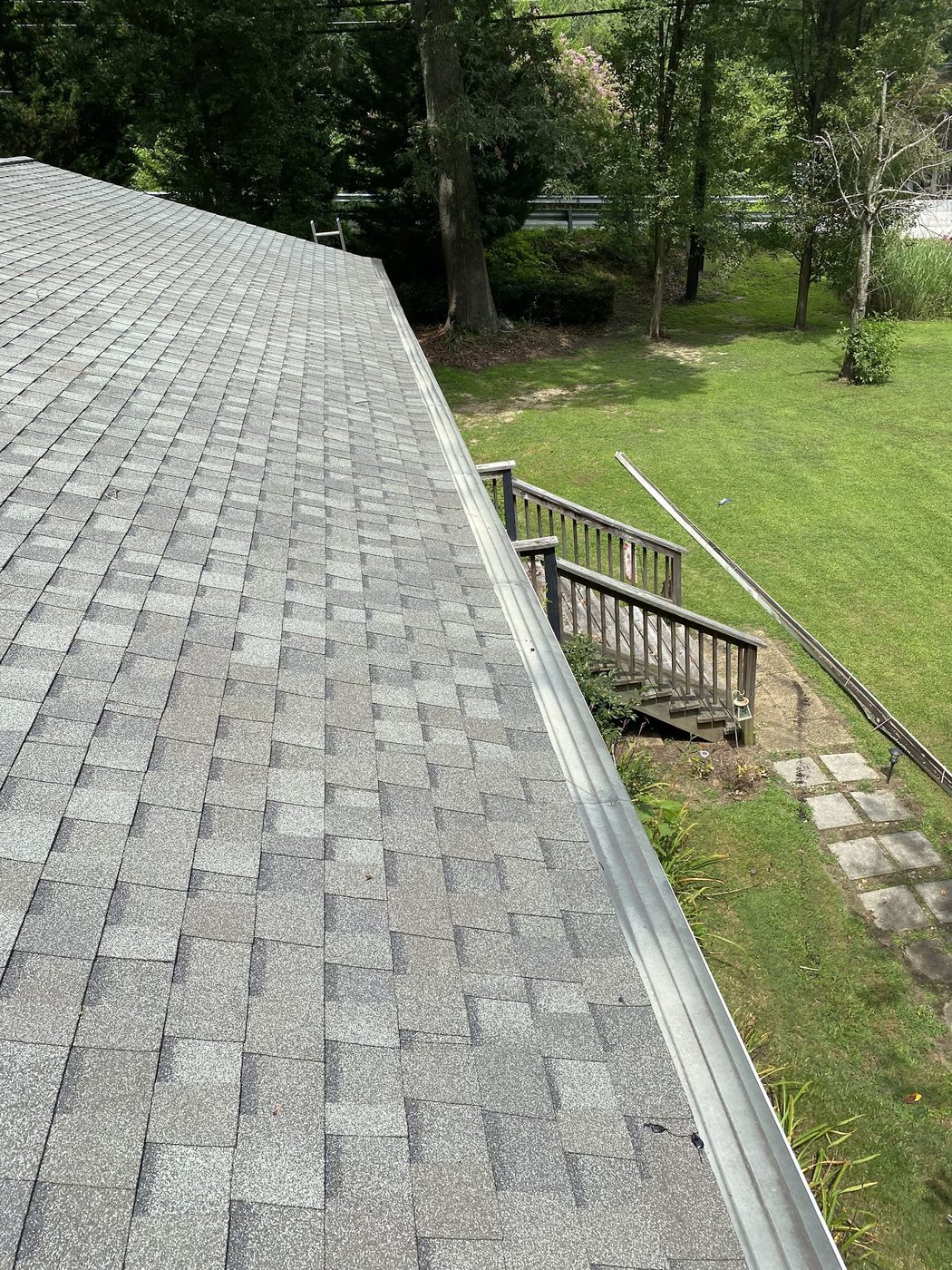
Is It Algae, Moss, or Something Else?
It helps to know what you are looking at, because the fixes are different.
Algae (black or dark green streaks)
Flat, stain-like streaks that follow the water path down the roof, with no texture. This is the most common call we get.
Moss (green, fuzzy, raised)
Moss grows in thick clumps, usually along shingle edges and in the gaps between courses. Unlike algae, moss holds water against the shingle and can lift the edges, which lets water get underneath. Moss on a roof in Maryland is more serious than algae and should be dealt with sooner.
Lichen, dirt, or granule loss
Lichen shows up as crusty gray-green patches that grip the granules and are hard to remove without pulling granules with them. Bare, shiny patches where the granules are gone are a different problem entirely: that is wear, and it is a conversation about the roof’s condition rather than cleaning.
Do Black Streaks Damage the Roof?
For the most part, algae streaks are cosmetic. They do not eat through the shingle or cause leaks on their own. That said, the algae coating holds a little moisture against the shingle surface, which keeps the roof damper and can speed up granule wear over a long period.
The bigger issue is what the streaks tell you. A roof that is streaked heavily on one side is a roof that stays wet on that side. That can point to shade you cannot change, but it can also point to poor ventilation, overflowing gutters, or debris buildup, all of which cause real damage over time. The streaks are worth paying attention to as a symptom even when they are not a problem by themselves.
How to Remove Black Streaks Without Damaging Your Shingles
The single most important rule: do not pressure wash an asphalt shingle roof. High-pressure water strips the granules off the shingles, and those granules are what protect the asphalt underneath from the sun. A pressure-washed roof looks clean for a season and then ages fast. Shingle manufacturers warn against it, and it can affect your warranty.
The accepted method is a low-pressure wash: a roof-safe cleaning solution applied with a garden-pressure sprayer, allowed to sit, and then rinsed gently. Common solutions are based on sodium hypochlorite (diluted household bleach) or sodium percarbonate, and either one needs to be used carefully:
- Wet down and cover plants and grass below the roofline, since runoff can damage them
- Avoid cleaning on a hot, sunny day when the solution dries before it can work
- Never scrub or brush the shingles, which removes granules the same way pressure washing does
- Clean out the gutters afterward, because the loosened algae and debris will wash into them
Shingles are also slick when wet. If the roof is steep or two stories up, this is a job for someone with the right equipment and harness, not a weekend project.
How to Keep the Streaks From Coming Back
Cleaning removes the algae that is there now. It does not stop new spores from landing next spring. A few things that make a real difference:
Algae-resistant shingles. Most major shingle manufacturers make lines with copper or zinc-coated granules mixed into the surface. Those metals inhibit algae growth as rain washes over them. If your roof is due for replacement anyway, choosing an algae-resistant shingle is the simplest long-term fix.
Zinc or copper strips. On an existing roof, a metal strip installed just below the ridge releases small amounts of zinc or copper every time it rains, which slows algae on the slope below. It is not a cure, but it helps.
Trim back trees. More sun and airflow means the roof spends less time damp, with fewer leaves holding moisture against the shingles.
Keep the gutters clear and the attic ventilated. Both keep the roof surface drier. Our post on maintaining your roof between inspections covers the seasonal habits that make the biggest difference in our climate.
Roof Cleaning vs. Replacement: Which Do You Need?
Streaks alone do not mean you need a new roof. Plenty of sound roofs are streaked simply because they face north under a maple tree. Cleaning is the right answer when the shingles are otherwise in good shape: granules intact, edges lying flat, no curling or cracking, no leaks.
Replacement comes into the conversation when the streaks are accompanied by other signs of wear. Bare patches where the granules are gone, shingles curling at the edges, moss that has lifted the shingle tabs, or stains inside the house all suggest the roof has problems beyond the surface. In that case, cleaning is spending money on a roof that is on its way out, and the better move is a professional roof inspection that looks past the streaks at the granule condition, the flashing, the ventilation, and the deck. If the roof is sound, you have your answer and a cleaning plan. If not, our post on signs you need a new roof shows how the symptoms stack up.
“We had a leak come through into our house. Tony had someone out right away to help us out then came himself and helped more and explained so well and honestly. That was very much appreciated. Fixing what we needed was super fast and great also.”
Luke Repicky, 5-star Google review
Frequently Asked Questions
What causes black streaks on a roof?
Black streaks on asphalt shingles are caused by Gloeocapsa magma, a type of algae that feeds on the limestone filler in shingle granules. It thrives in humid, shaded conditions and spreads downhill with rainwater, which is why the streaks run vertically.
Can I pressure wash black streaks off my roof?
No. Pressure washing strips the protective granules off asphalt shingles and shortens the roof’s life. Use a low-pressure application of a roof-safe cleaning solution instead, or hire a professional who uses that method.
Do algae-resistant shingles actually work?
Yes. Algae-resistant shingles contain copper or zinc-coated granules that inhibit algae growth as rain washes over them. They are the most reliable long-term prevention if you are replacing the roof anyway.
Does moss on a roof need to be removed?
Yes. Unlike algae, moss holds water and can lift shingle edges, allowing water underneath. It should be removed gently (never scraped or pressure washed) and the cause of the moisture addressed.
Not Sure If It Is Just Algae? Get a Free Roof Inspection
If your roof is streaked and you want to know whether it needs a cleaning or something more, One Vision Roofing can take a look. We are a family-owned, licensed and insured, GAF Certified roofing contractor serving Mechanicsville, Charlotte Hall, Hughesville, Leonardtown, and the wider Southern Maryland region. Call (301) 909-3383 or request your free estimate online.
