
Yes, you can replace a roof in winter in Southern Maryland. Cold weather changes how a crew schedules and seals a roof, but it does not mean you have to wait for spring. Many days between November and February are workable, and a roof that is already failing often costs a homeowner more by waiting than by installing in cold weather.
The real question is not whether winter installs happen. It is what changes when the temperature drops, and what a good crew does about it. This post covers how shingles seal in the cold, how scheduling works around rain and snow, and how to decide between replacing now and holding off. If you already know the roof is at the end of its life, our roof replacement service page explains how the process works.
What Changes When You Replace a Roof in Cold Weather
Asphalt shingles have a strip of factory-applied sealant on the underside. In warm weather, sun heats that strip and it bonds each shingle to the course below, which is what holds the roof down in high wind. In cold weather the sun does less of that work, so the bond forms more slowly.
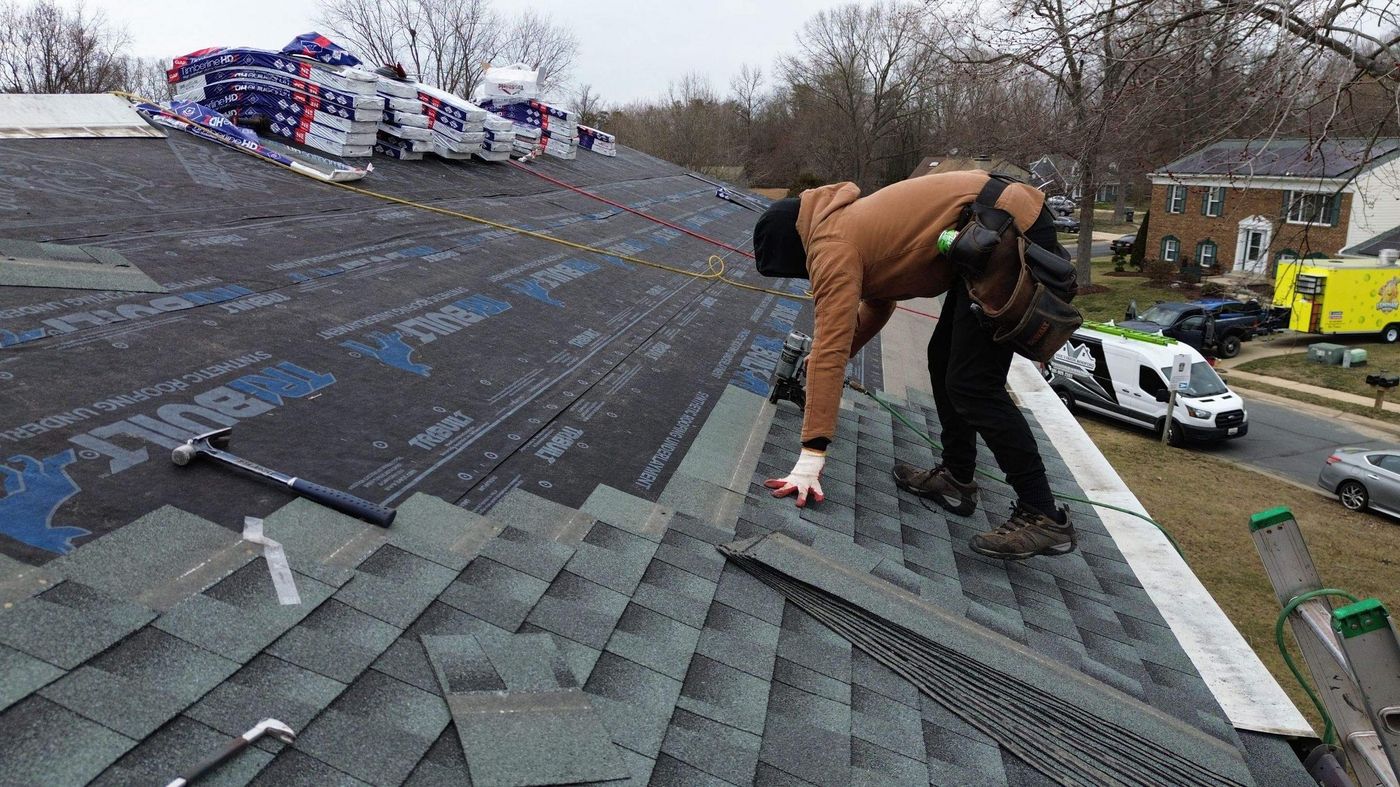
That does not mean the roof will not seal. It means the crew plans for it. Shingle manufacturers publish cold-weather application guidance, and a GAF Certified crew follows the manufacturer’s installation instructions rather than guessing. In practice that can mean hand-sealing shingles where the sealant strip has not activated, handling shingles carefully because they crack more easily when bent in the cold, and paying close attention to nail placement. The exact limits depend on the product, so any single temperature rule you read online should be checked against the instructions for the shingle being installed.
Average winter temperatures near Mechanicsville, MD
Daily highs and lows by month, 1991 to 2020 averages. Southern Maryland winter days are often cold, but many are well above freezing.
Bars start at zero. These are 30-year averages, so any single day can be warmer or colder. Shingle manufacturers set their own cold-weather rules, so the crew follows the instructions for the shingle being installed. Source: NOAA National Centers for Environmental Information, U.S. Climate Normals 1991-2020, monthly normals, station Mechanicsville 5 NE, MD (USC00185865).
How Winter Weather Affects Scheduling
The bigger variable in winter is not temperature, it is the forecast. A roof replacement strips the old shingles and exposes the deck, so a crew needs a dry window to tear off, dry in, and get a roof back on. Rain, sleet, snow on the deck, and high wind all push a start date back.
Southern Maryland winters are milder than they are farther north, so there are usually plenty of workable days between storms. Still, a winter schedule is more flexible than a summer one. A few things to expect:
- Start dates can shift by a day or several days when the forecast changes
- A good crew will not open up a roof ahead of weather it cannot close in
- Short winter days mean the crew plans each day around finishing a section before dark
- Frozen or wet decking has to be dry and clear before new material goes on
How many winter days bring rain or snow near Mechanicsville, MD
Average days per month with measurable precipitation, 1991 to 2020. Most winter days are dry.
Each bar is one whole month. “Days without” is the number of days in the month minus NOAA’s average number of days with at least 0.01 inch of precipitation, so it also includes cloudy and cold days. A dry day is not always a workable day, and the crew still checks the forecast before tear-off. Source: NOAA National Centers for Environmental Information, U.S. Climate Normals 1991-2020, days with precipitation of 0.01 inch or more, station Mechanicsville 5 NE, MD (USC00185865).
Should You Wait Until Spring?
For a roof that is leaking, sagging, or missing shingles, waiting is usually the more expensive choice. Water that gets in during winter soaks insulation, stains ceilings, and can rot the roof deck, and those repairs stack on top of the replacement itself. A roof with a known active leak is a good candidate to move forward now.
Waiting can make sense when the roof is old but not failing, when there are no leaks, and when a spring schedule fits your plans better. The way to tell which situation you are in is an inspection, not a guess. Our guide to the best time to schedule a roof inspection explains what a roofer looks at, and our winter roofing tips cover what to do to protect a roof that has to get through the season as it is.
Signs Your Roof Should Not Wait
- Water stains on ceilings or walls after rain or snowmelt
- Daylight or dampness visible in the attic
- Shingles that are missing, curled, or cracked across a whole slope
- Granules collecting in gutters in large amounts
- A roof that has already had repeated repairs in the same spot
Any of these is a reason to get the roof looked at now. A roofer can tell you whether a repair buys you time or whether replacement is the right call.
What to Ask a Roofer Before a Winter Install
- How will you handle sealing the shingles in cold weather?
- What is your plan if the forecast turns during the job?
- How do you protect the open deck overnight?
- Which manufacturer instructions do you follow for the shingles you install?
- Who is certified to install the product, and is the crew licensed and insured?
A straight answer to those questions tells you more about a contractor than a quote does. A crew that has done winter work will answer without hesitating.
“Fantastic service. Great product selection. Fast and professional installation. Tony is extremely knowledgeable and easy to work with. Handled all the details and had roof removed and replaced the next day that weather allowed.”
Brian M., 5-star Google review
Frequently Asked Questions
Can you replace a roof in the winter?
Yes. Roofs are replaced in winter in Southern Maryland whenever there is a workable weather window. The crew adjusts how it seals and handles the shingles for cold conditions and follows the manufacturer’s installation instructions.
Do shingles seal properly in cold weather?
They can, but the factory sealant strip bonds more slowly without sun. Crews follow the manufacturer’s cold-weather guidance and may hand-seal shingles where the strip has not activated.
What is the best time of year to replace a roof?
Spring and fall are popular because weather is mild and stable, but the best time is usually when the roof needs it. A leaking or failing roof should not wait for a perfect season.
Will a winter roof replacement take longer?
It can. Rain, snow, and high wind can move a start date or pause a job, and shorter days limit how much gets done each day. A good crew plans around the forecast rather than rushing.
Thinking About a Winter Roof Replacement? Get a Free Estimate
If your roof is leaking or near the end of its life and you want to know whether to replace it now or wait, One Vision Roofing can look at it and give you a straight answer. We are a family-owned, licensed and insured, GAF Certified roofing contractor serving Mechanicsville, Charlotte Hall, Hughesville, Leonardtown, and the wider Southern Maryland region. Call (301) 909-3383 or request your free estimate online.
