
When water sheets over the front of your gutter during a heavy rain, most people assume the gutters are clogged with leaves. Sometimes that is the whole story. But if the gutters overflow even after they have been cleaned, the cause is usually something else: how they are pitched, how they are fastened, how many downspouts there are, or how much water your roof sends their way.
This post covers six causes of overflowing gutters that cleaning does not fix, and how to tell when a repair is enough and when replacement makes more sense. If you would rather have someone look at them, our gutters and downspouts service page explains what we do.
1. The Gutters Are Not Pitched Correctly
Gutters need a slight slope toward the downspout so water keeps moving. If a section sags or the slope runs the wrong way, water pools in the low spot and spills over the edge even when nothing is clogging it. You can often spot this after rain: look for standing water in the gutter an hour after it stops, or a stripe of water running down the siding at the same place every storm.
2. Hangers Have Loosened or Failed
Gutters are held to the fascia by hangers or brackets. Over the years, freeze and thaw cycles, ladder pressure, and the weight of wet debris can loosen them. When the gutter starts to pull away from the house, the slope changes and the back edge can drop below the front, so water pours over the back or runs behind the gutter into the fascia. A gutter pulling away from the house is a sign to have it checked, not to ignore.
3. The Gutters Are Too Small for the Roof
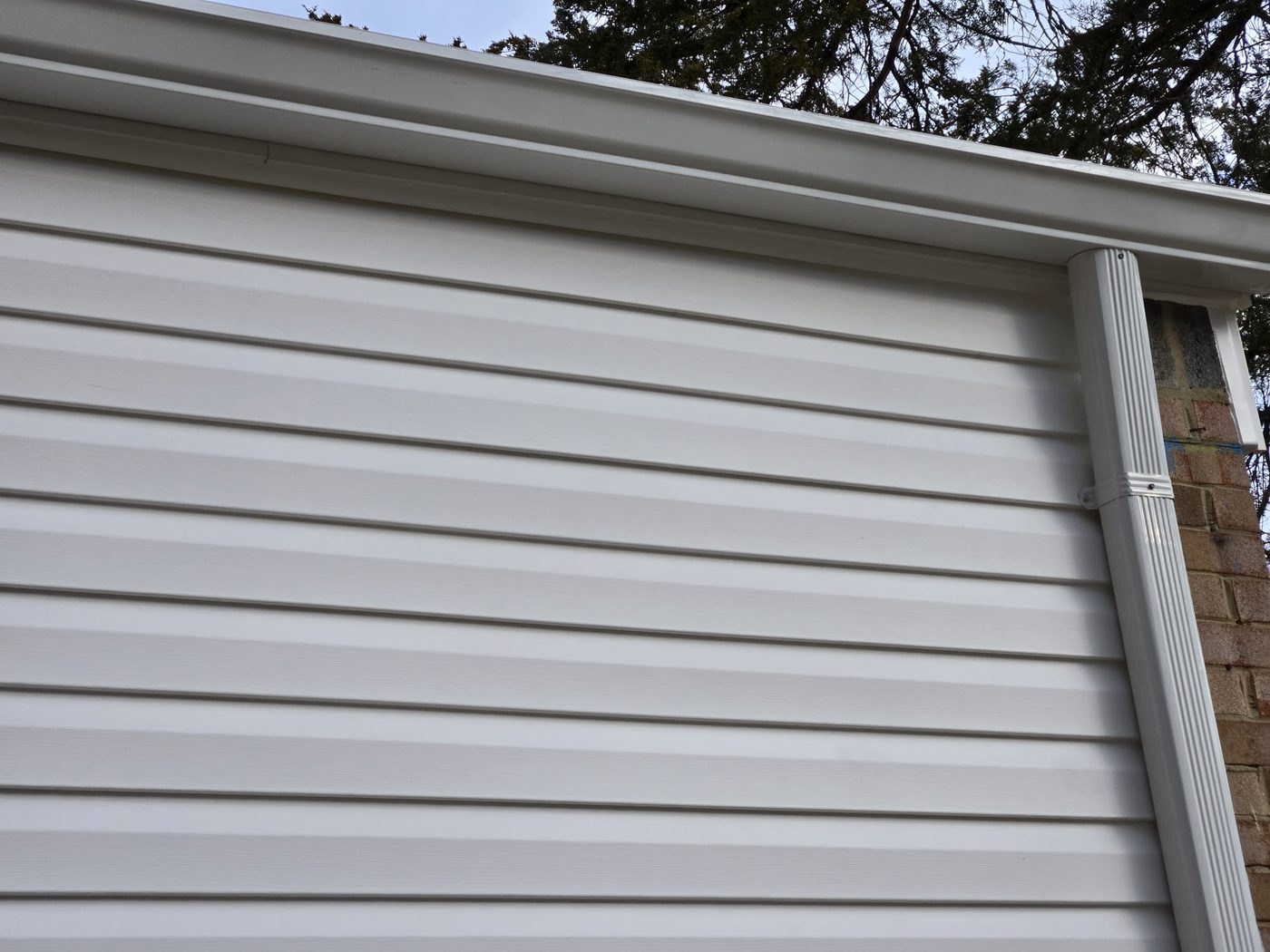
A gutter can only carry so much water. A large roof plane or a steep slope sends a lot of water to one stretch of gutter in a short time, and a gutter that was sized for a smaller roof or lighter rain can overflow in a storm even when it is perfectly clean. If the overflow always happens at the same section during heavy rain, that is a clue that the gutter is working harder than it was built to.
How much water one inch of rain puts on a roof
Footprint is the area the roof covers when you look straight down. The gutters on that roof have to move all of it.
Calculated, not measured. One inch of rain on one square foot is 144 cubic inches of water, and a U.S. gallon is 231 cubic inches, so each square foot of roof footprint sheds about 0.62 gallon per inch of rain. The footprints are examples. Your roof, its slope and how much of it drains to one gutter run will differ, and not all of that water reaches the gutter. Source for the gallon: NIST Handbook 44, Appendix C (1 gallon = 231 cubic inches).
4. There Are Not Enough Downspouts, or They Are Clogged
Gutters only drain as fast as their downspouts allow. A long run with one downspout at the far end can back up in a downpour. And a downspout that is clogged at the elbow or at the bottom will back water up the whole system, so the overflow starts at the top even though the blockage is at the bottom. Run water from a hose through the downspout to see if it flows freely.
5. Water Is Getting Behind or Past the Gutter
Sometimes the gutter is fine and the water never lands in it. A gap at the roof edge, or a steep roof that sends water off at speed, can shoot water over the gutter instead of into it. If you see water running behind the gutter or staining the fascia, the roof edge detail may need attention. This is also why damaged fascia and failing gutters often show up together, which our post on soffit and fascia explains.
6. Leaves, Seeds, and Shingle Grit Have Built Up
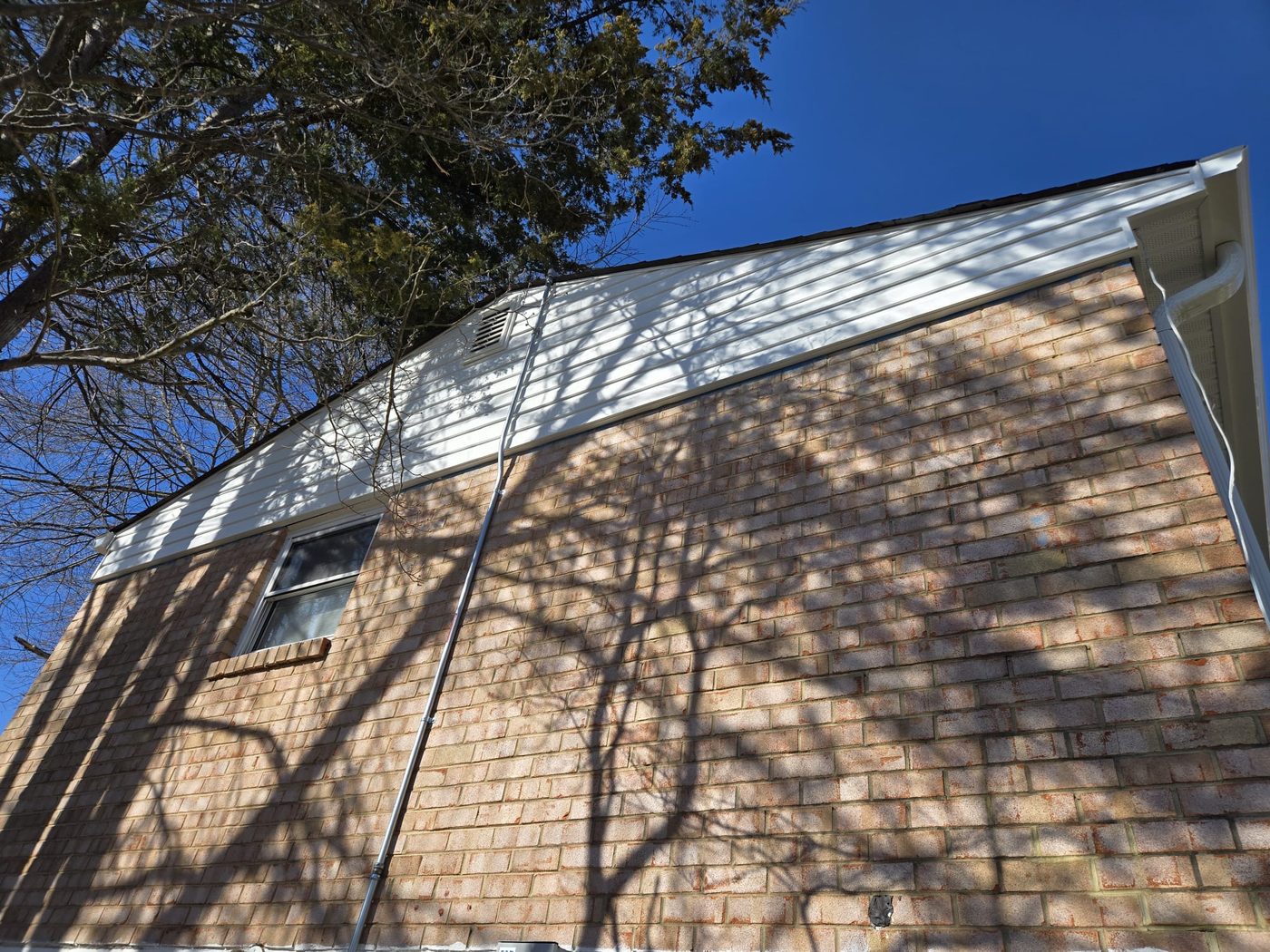
Cleaning does matter, and it is still the most common reason. Leaf drop in the fall, helicopter seeds in spring, and the granules that wash off aging shingles all collect in the gutter. A gutter that is full of packed debris has little room left for water. The fix is simple, but if the gutter fills back up quickly, look at the other five causes too.
Repair or Replace? How to Decide
Repair is usually enough when the problem is a loose hanger, a clogged downspout, a short sagging section, or a sealant failure at a seam. Those are fixes to part of the system, and the rest of the gutter is in good shape.
Replacement tends to make sense when the gutters are bent, rusted through, pulling away along most of their length, or overflowing in several places no matter what has been done. At that point, repairs add up and the system keeps failing. Seamless gutters have no joints along the run, which removes one of the common places leaks start. A roofer can look at the whole picture and tell you which situation you are in.
Why Overflowing Gutters Matter in Southern Maryland
Fall leaf drop and winter rain mean gutters carry heavy loads from November through spring. Water that spills over the edge lands at the foundation, and our local clay soils do not drain quickly. Over time that can lead to wet crawlspaces and basement moisture. Our post on how gutters protect your home’s foundation explains that connection in more detail.
“Reached out to One Vision for an estimate on a complete renovation of gutters, soffit and facia board. With their recommendation, we upgraded from 4” gutters to 6” seamless with an added Down spout. In less than two days everything was redone and the work is unmatched.”
Daniel B., 5-star Google review
How hard Southern Maryland rain can fall in a short burst
Rainfall rates in inches per hour for 5, 15 and 60 minutes of rain, near Mechanicsville, MD.
Bars start at zero. Each rate is the average over that stretch of rain, and a rate with a 2-year or 10-year average recurrence interval is one that is reached or exceeded, on average, once every 2 or 10 years at this spot. Short bursts are much more intense than the hourly rate, which is why a gutter can overflow in minutes. Source: NOAA Atlas 14, Volume 2, Version 3, point precipitation frequency estimates for 38.4928, -76.7258 (Mechanicsville, MD), partial-duration series.
Frequently Asked Questions
Why are my gutters overflowing when they are clean?
Common causes are poor pitch, loose hangers, too few downspouts, a clogged downspout, gutters too small for the roof, or water getting behind the gutter. Cleaning only fixes debris.
Why are my gutters pulling away from the house?
Loose hangers or brackets, rotted fascia, and the weight of wet debris are the usual causes. Once a gutter pulls away, its slope changes, which makes overflow worse.
How do I know if my downspout is clogged?
Run water from a hose into the top of the downspout. If it backs up or drains slowly, there is a clog at an elbow or near the bottom.
Should I repair or replace overflowing gutters?
Repair works for loose hangers, a clogged downspout, or a short sagging section. Replacement is worth considering when gutters are bent, rusted, or failing along most of their length.
Gutters Overflowing? Get a Free Estimate
If your gutters overflow in heavy rain and cleaning has not fixed it, One Vision Roofing can look at the pitch, hangers, and downspouts and tell you what the system needs. We are a family-owned, licensed and insured, GAF Certified roofing contractor serving Mechanicsville, Charlotte Hall, Hughesville, Leonardtown, and the wider Southern Maryland region. Call (301) 909-3383 or request your free estimate online.
